

Hedge Funds’ Dual Strategies: Navigating Volatility with Long and Short Positions
Author:
S3 Research Team
Hedge funds’ complex strategies involve balancing long and short positions in stocks, with company size, volatility, and ratings significantly impacting their net market exposure.
We analyzed the stocks with the highest and lowest short interest, measured as a percentage of the float.
The least shorted stocks are held by hedge funds at half the rate of the more shorted ones.
There is a correlation of 0.35 between long holdings and short holdings. This may indicate that hedge funds are engaging in both long and short positions as part of an options strategy, resulting in no net position.
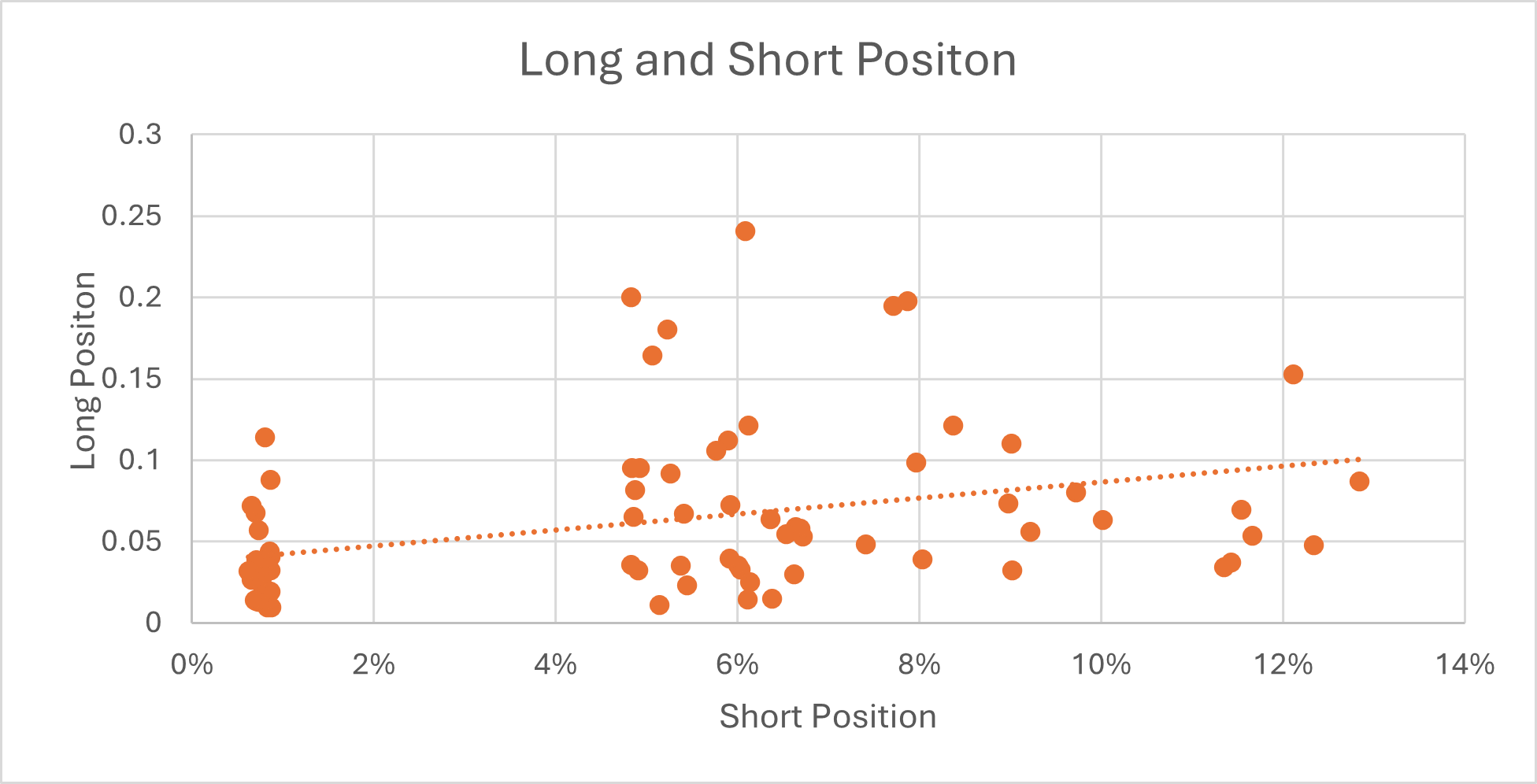
This suggests that long and short positions are partially offset by other hedge funds.
By subtracting the short positions from the long positions, we can determine the net.
Thus, we have four columns: Long, Short, Total, and Net.
Smaller companies tend to have higher percentages of long and short positions, as well as larger total positions.
More volatile companies exhibit larger long and short positions and total positions. Additionally, their net positions tend to be more negative.

Stocks that have declined significantly tend to have larger short positions and total positions.
Lower-rated stocks have larger short positions and total positions, while higher-rated stocks tend to have higher net positions.
Stocks with higher open interest exhibit significantly larger short positions, larger long positions, and a net short position.
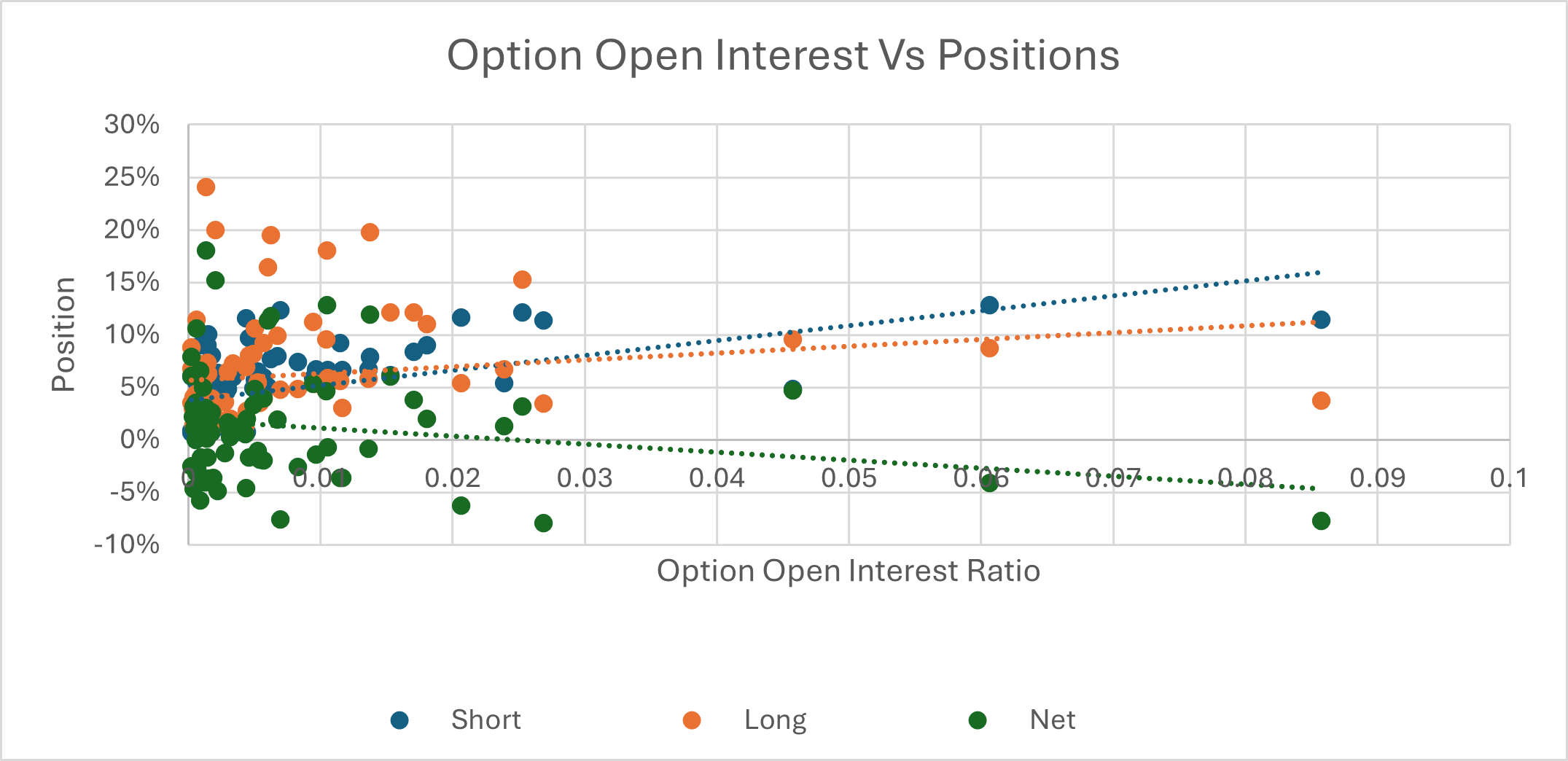
By combining long and short positions, we obtain a clearer picture of both total and net positions, which are correlated with company size, volatility, year-to-date return, analyst ratings, and open interest.
Want to know more?
Access this data in real time using S3’s BLACK APP or Contact us to get started.